
Featured post

IBM’s Process Management Solution is a game changer

In January 2010, IBM purchased a game-changing software from Lombardi Inc called “Blueworks Live.” This is a process management software solution that has received minimal attention and remains a hidden gem. Yet, the software can help organizations map all their processes and procedures in a centralized SaaS for global visibility on all the processes within the organization. It provides additional features for analysis and improvements such as standardized participants, systems, and SIPOC (Supplier, input, process, output, and customer) analysis. 

Each activity box allows the editor to input further information on the procedures and metrics relating to that specific activity.

Over the years of using this solution, there are some best practices that I have learned to enable successful adoption within an organization:

1. Always use between 8-12 processes within a single process map. Any more should result in consideration for a linked process.
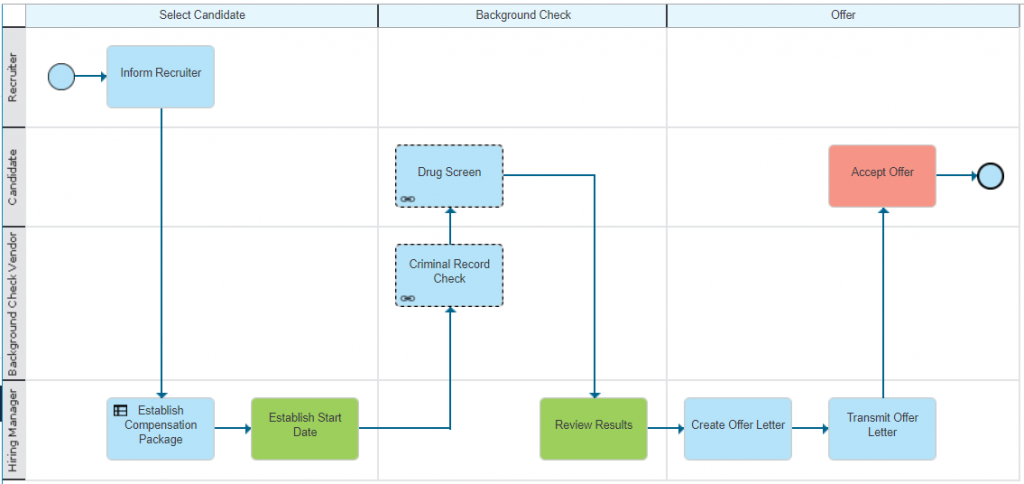
2. Each process should have a standardized participant selected- enabling visibility on how a single participant operates across various processes. 
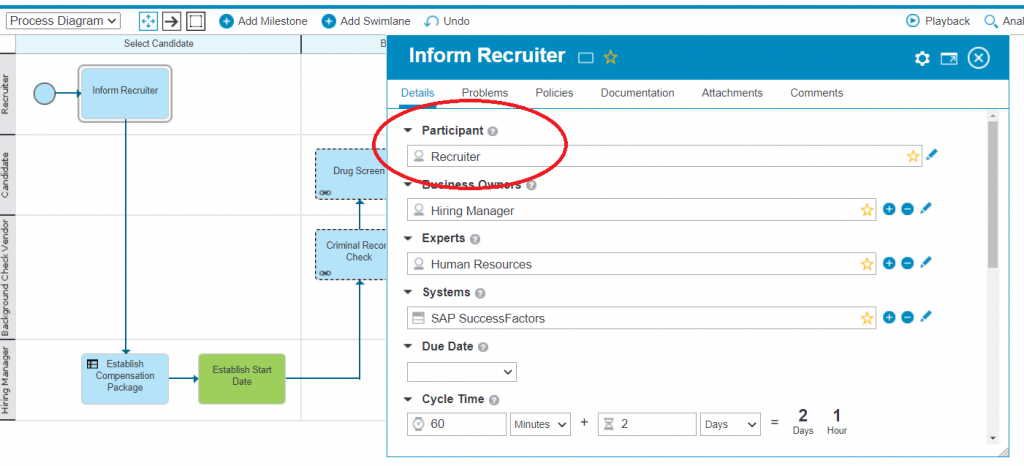
3. Each process should have a standardized system selected- this will enable visibility on how a system is used across various processes.
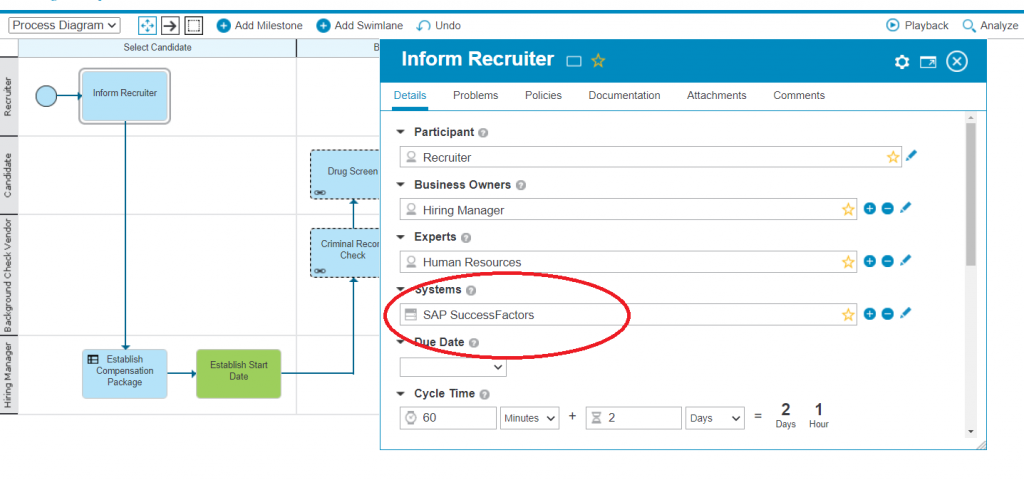
4. Each box should have additional details on how the step is to be completed, including other links, checklists etc. This will allow for a fulsome process document with all the details to complete the work.
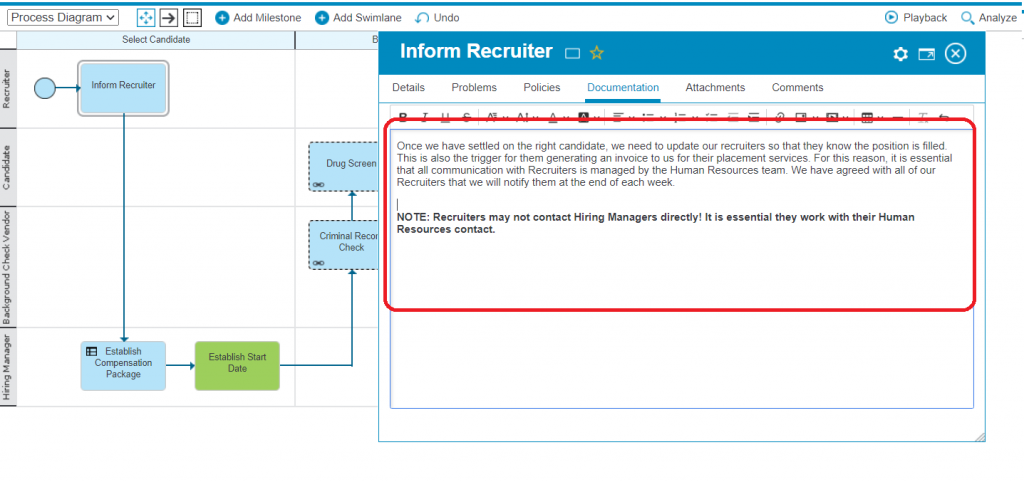
5. Choose the next element of standardization (e.g. Cycle time, Cost, SIPOC etc.) and consistently address in each box to create meaningful data across the processes. 
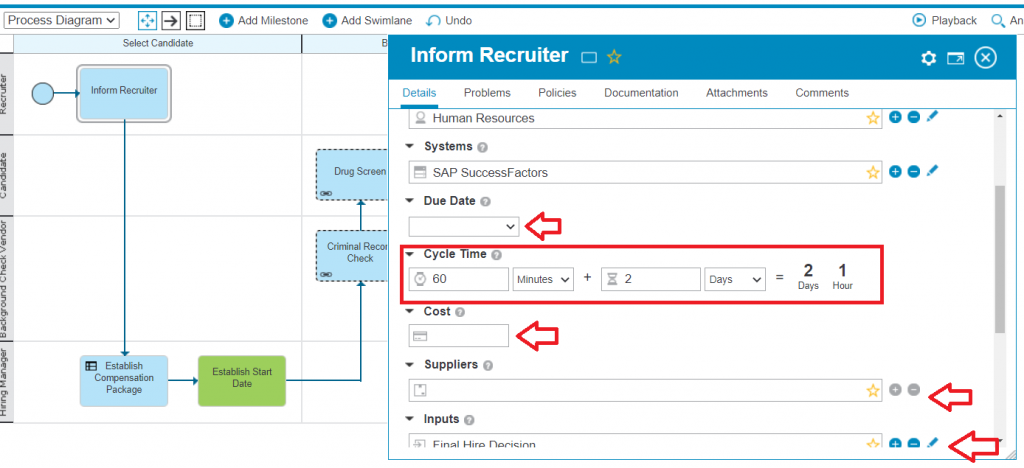
With these small steps to putting processes within the tool, organizations can maximize the effectiveness and gather critical business information that can help optimize processes, facilitate change management, facilitate acquisitions of ISO certifications or other audit requirements, and ensure that the organization is continually monitoring its processes.

Reach out to me at mirette.sedarous@naracat.com to learn more about how this simple yet powerful tool, when used properly, can save your organizations hundreds of thousands of dollars, and position you for successful business growth.


Featured post

Process Software 101


What is the difference between business process mapping and business process management software? The difference is that, unlike process mapping, process management requires mapping the processes and writing the detailed procedures of each process step, and identifying information such as the participant, system in use, inputs, outputs, cost, cycle time, wait time, etc. While business process mapping is a crucial business analysis tool, business process management is vital to business intelligence, continuous improvement, and change management.
Selecting the appropriate solution is essential to ensure that the business can collect the necessary information to support the requirements.
Lucidcharts or Miro have process mapping capabilities that enable cross-functional collaboration and engagement in a virtual setting. These tools benefit business analysts as they help elicit information from their stakeholders because of the real-time collaboration and dynamic interactions that can result from this type of engagement. MS Visio would also be considered a process mapping software, but it is less user-friendly and requires much work offline to clean up the content.
Software like IBM Blueworks Live is a process management software because there will be a collection of process maps and detailed procedures for each step, a standardized list of participants, a standardized list of systems, and other key values for each step to enable proper business analysis. For example, analysis from IBM Blueworks Live can include identifying where participants are being used across all processes, where systems are being used across operations, or individual studies of cycle time or wait time in any single process. There are other solutions such as SAP Signavio, where processes are mapped and analyzed to assess the true value and impact of business changes.
Process mapping and process management software are all still focused on eliciting information from the business to enable further changes.

Process automation tools are a different set of software products focused on workflow automation, rendering manual tasks obsolete.
Examples of Process Mapping Software
Examples of Process Management Software
Examples of Process Automation Software

Featured post

Understanding the Vital Distinction: Processes vs. Procedures

In the realm of organizational efficiency and productivity, two terms frequently bandied about are ‘process’ and ‘procedure.’ While they might seem interchangeable at first glance, understanding the nuances between them is pivotal for streamlined operations. The conflation of these terms often leads to convoluted documentation, hindering clarity, and impeding progress. In this article, we will delve into the differences between processes and procedures and why it is crucial to distinguish between them to create comprehensive and useful documentation.

Processes: The Strategic Blueprint

Processes are the strategic blueprints of any organization’s operations. They are the high-level, overarching series of activities that define the path toward achieving specific business goals. Think of them as the grand design, the master plan that outlines what needs to be done. Processes are not bogged down by the nitty-gritty details; instead, they offer a panoramic view of the journey from initiation to completion. For instance, ‘customer onboarding’ is a process that encapsulates all activities involved in bringing a new customer into the fold.

Procedures: The Tactical Execution

On the other hand, procedures are the tactical execution guides. They are detailed, step-by-step instructions that elucidate how a particular task within a process is executed. Procedures zoom in on the specifics, breaking down tasks into manageable components. Unlike processes, procedures are granular and specific, providing the necessary guidance for employees to perform their duties effectively and consistently. In the context of customer onboarding, a procedure might outline the steps involved in verifying customer information, creating accounts, and delivering welcome packages.

The Importance of Distinguishing Between Them

1. Clarity and Understanding:
Distinguishing between processes and procedures enhances clarity. When employees comprehend the difference, they can clearly visualize the ‘what’ and the ‘how.’ Processes provide the context, outlining the big picture, while procedures offer the actionable steps. This clarity prevents confusion and ensures that everyone is on the same page.

2. Documentation Precision:
Clear differentiation leads to precise documentation. Process documents remain high-level, succinctly capturing the entire workflow. Procedures, documented separately, can delve into the specifics without cluttering the process documentation. This separation results in documents that are both comprehensive and concise, aiding in easy reference and understanding.

3. Agility and Adaptability:
In a dynamic business environment, agility is key. When processes and procedures are distinct, it becomes easier to update procedures without upheaving the entire process. This agility ensures that organizations can adapt swiftly to changing requirements, market dynamics, or technological advancements.

4. Training and Onboarding:
Effective training and onboarding rely on clear communication. New employees need to grasp the overarching processes to comprehend their role within the organization. Once the processes are understood, they can delve into the specific procedures related to their tasks. This sequential understanding accelerates the learning curve and promotes competency.

5. Enhanced Problem Solving:
When processes and procedures are clearly defined, troubleshooting becomes more efficient. Identifying issues within a process is simpler when the overall structure is understood. Once the problem area is located, employees can refer to the corresponding procedures to find precise solutions, leading to quicker issue resolution.

The distinction between processes and procedures is not merely a matter of semantics but a linchpin in the realm of efficient operations. Organizations that comprehend and respect this difference are better equipped to create documentation that is comprehensive, understandable, and adaptable. By embracing this distinction, businesses pave the way for enhanced productivity, improved employee performance, and ultimately, organizational success.